Stampli cut launch production time 68% with Codex, not headcount
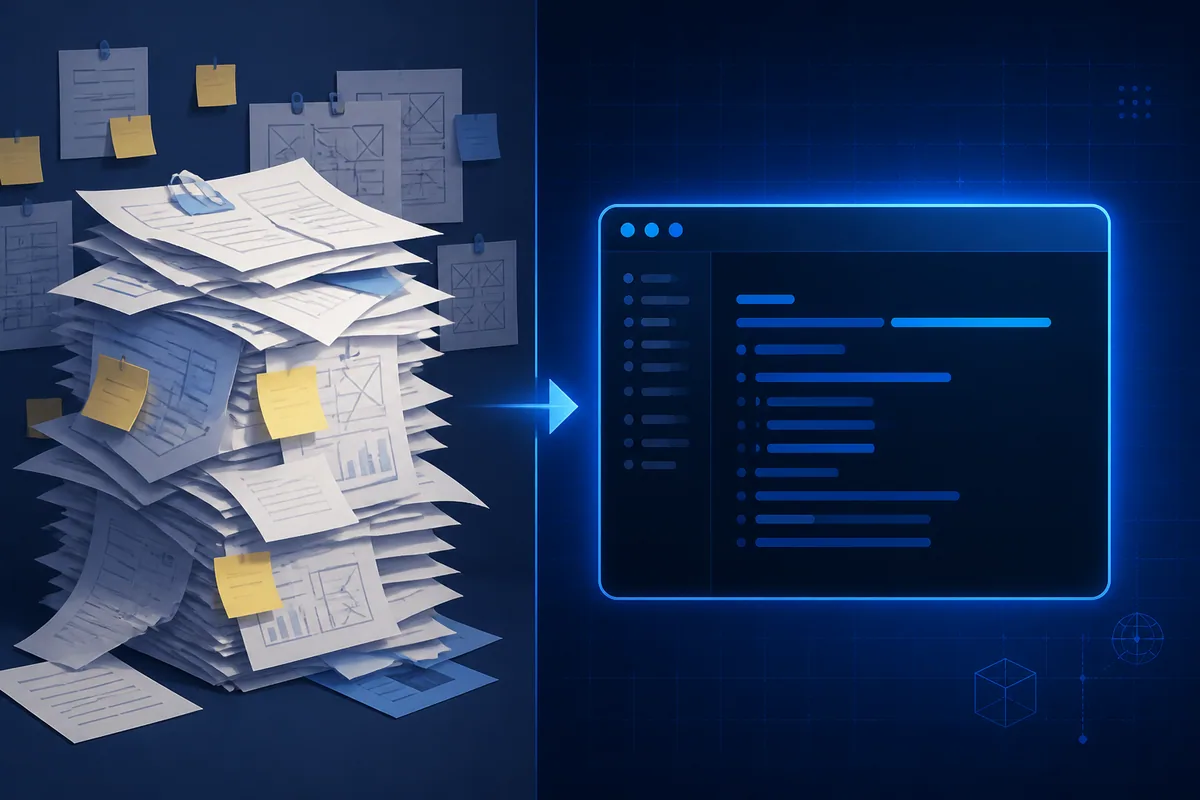
Good morning 👋 A marketing team, not an engineering one, just cut 166 hours off a product launch with Codex. The number's real, and the detail underneath it is the one worth stealing.
In today's issue:
- 🔭 Stampli cut launch production time 68% with Codex, not headcount
- 🧠 AWS ships six vector search options where your data already lives
- 🔬 Agent skill memory that backfires, and a router that skips the expensive check
- 🚀 Inherent's Faraday claims a win over Opus 4.8 and GPT-5.5 on paper replication
- 🔗 Nvidia's $6B Poolside deal, AWS automates mortgage document intake
Get tomorrow's issue in your inbox.
One concise AI brief, sent after the signal clears the noise.
🔭 THE ONE THING
⏱️ Stampli cut launch production time 68% with Codex, not headcount
Stampli's marketing team took its Deep Finance spend-intelligence product from prototype to public launch in six weeks, cutting production hours from 243 to 77 (a 68% drop) by running Codex and ChatGPT Work across product context and messaging guidelines, per OpenAI's case study. Director of product marketing Melad Zahedi says the tools "multiplied the output of a small team by 10x," per StartupHub.ai. Take that number as marketing math, but the 68% hours figure is Stampli's own accounting, independently corroborated, and it's a real labor count, not a vibes one. The detail worth stealing: marketing ran Codex here, not engineering, to pull scattered product decisions and messaging into one coherent launch. Most founders still file Codex under "engineering tool" only.
🧠 MODELS & RELEASES
- ⚡ AWS rolled out six purpose-built vector search options across services you're already running (DynamoDB, Aurora, OpenSearch, and friends), plus a decision framework for picking one. No standalone vector DB, no data migration. Builder read: if you've been avoiding Pinecone or a self-hosted pgvector setup just to add RAG, that excuse is gone. AWS blog
🔬 RESEARCH HIGHLIGHTS
- Skill memory can backfire. Teaching an agent to save and reuse "skills" from past tasks sounds like free progress. A new study finds whole-task skills usually drag performance below an agent with no memory at all, while subtask-level skills, especially kept as text instead of code, actually help. If you're building agent memory, granularity is the difference between an upgrade and a liability. arXiv
- Routing that knows when not to check. Multi-model systems need to route each query to the right specialist, but figuring out who's best can cost more than just asking a mediocre one. This paper treats it as the classic Pandora's Box search problem: pay for an expensive quality estimate only when the extra certainty is worth it. The resulting router matches full-inspection routing quality while skipping most of the expensive checks, useful if you're paying per call to decide which model gets the request. arXiv
- GDP without people. A theory paper, and my skepticism is up: it models a post-AGI economy where corporations own AI and robot populations that produce and consume among themselves, growth maximized by reinvesting everything, humans optional. The math holds on its own terms, and it collapses human welfare to one variable: how much of the corporate network people actually own. Read it as a warning about ownership policy, not a forecast. arXiv
🚀 AI STARTUPS
- Inherent raised $50M in seed and used part of it to make a specific claim: the London lab's new Faraday agent, a 27B-parameter model trained with long-horizon RL, beat both Claude Opus 4.8 and GPT-5.5 at reproducing figures from published research papers. Founders are DeepMind alumni. The benchmark (Replica, 310 tasks pulled from 100 papers spanning NLP, materials science, weather forecasting) is theirs, not independent, and Faraday leans on GPT-5.5 Codex as a subroutine rather than replacing it. Promising, still self-graded homework until an outside lab reruns it. TechCrunch
🔗 QUICK LINKS
- Nvidia is paying Poolside $6B for a non-exclusive license to its model-building software, tossing in another $1B for a stake at a $12B valuation, and picking up 109 of its engineers along the way. Bloomberg
- AWS shows how a mid-size mortgage lender wired its whole document intake, email to validated data, on the GAIIC IDP Accelerator. AWS
That's the signal worth your time today.
Pradeep Perugu