NVIDIA Ships the Agent Leash. Not the Enforcer.
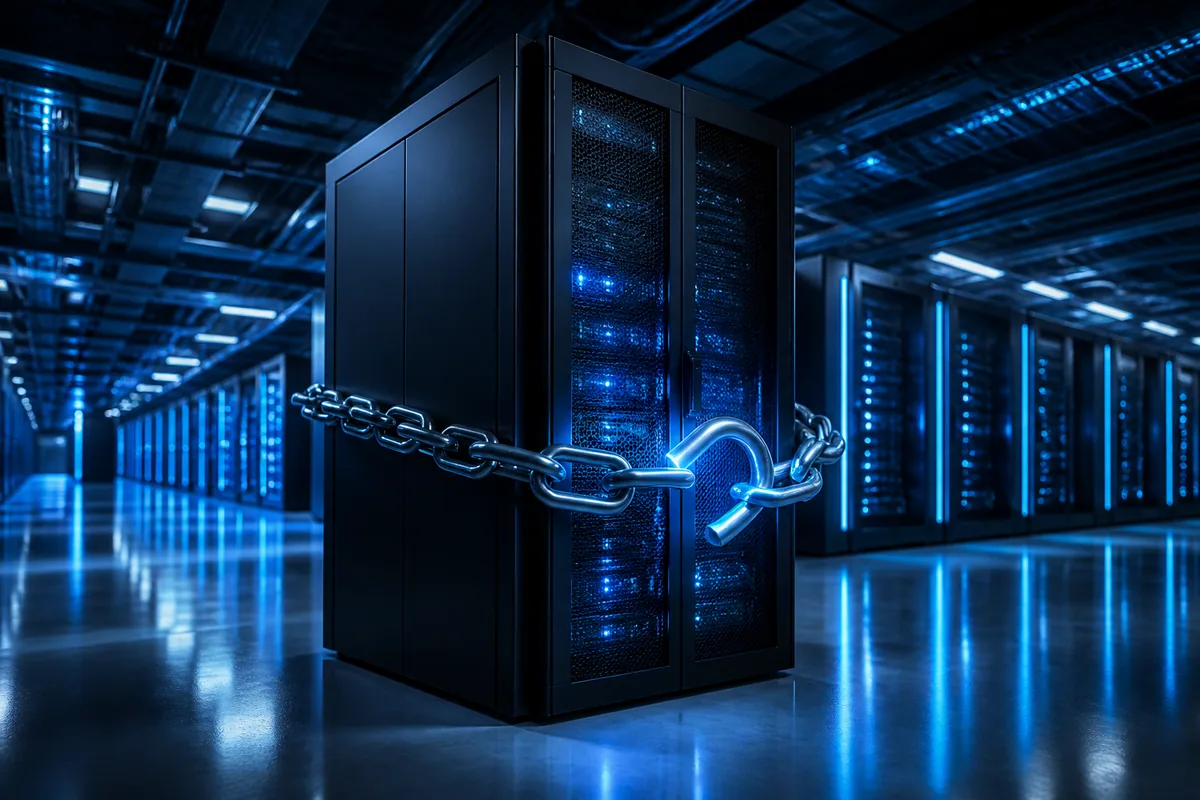
Good morning 👋 NVIDIA built a leash for AI agents. The half that actually enforces anything in silicon isn't shipping yet.
In today's issue:
- 🔭 NVIDIA ships the agent leash. Not the enforcer.
- 🧠 H Company's Holo4 clicks, codes, and calls APIs from one open-weight model
- 🔬 Sakana's robots get 45 tries instead of one, and two more papers worth your attention
- 🛠️ Add an accuracy gate before an agent's output ships
- 🔗 Red Queen Bio's bioweapon hedge, Proaction's Codex sales lift
Get tomorrow's issue in your inbox.
One concise AI brief, sent after the signal clears the noise.
🔭 THE ONE THING
🛡️ NVIDIA Ships the Agent Leash. Not the Enforcer.
NVIDIA launched OpenShell and Sentry this week: an open-source, Apache-2 runtime that fences in what agents can do on its new Vera CPUs (Arm and Intel compatible too), paired with a hardware watchdog on BlueField-4 DPUs that's supposed to quarantine a rogue agent in milliseconds. More than 100 partners signed on, including Anthropic, Microsoft, Cisco, CrowdStrike, JPMorganChase, Palantir, SAP, ServiceNow, and Hugging Face, which tells you every major lab and enterprise vendor wants NVIDIA's name attached to their safety story. Only OpenShell ships today. Sentry, the part that actually enforces anything in silicon, is still a reference design, so the "available now" bit is software policy you could in principle build yourself, not the hardware backstop the press release leans on. Deploying agents in production? Treat OpenShell as a decent baseline and file Sentry under 2027.
🧠 MODELS & RELEASES
- 🖱️ H Company shipped Holo4, an open-weight computer-use model that clicks around a screen, runs its own code, and calls APIs, all from one set of weights instead of task-specific variants. The 27B version hits 61.7% on OSWorld 2.0, well behind closed frontier agents (Opus 5.5 leads at 81.8%, most others closer to 72%), but it's self-hostable and cheap if you don't need frontier-grade autonomy yet. Hugging Face
🔬 RESEARCH HIGHLIGHTS
- Sakana's robots get 45 tries instead of one. SAIL swaps single-shot imitation learning for a vision-language model that proposes a trajectory, runs it in simulation, watches the resulting video for where it breaks, then uses Monte Carlo tree search to hunt for a better one before anything touches a real robot. Across six manipulation tasks, letting the system search 45 candidates instead of committing to the first one pushed the success rate from 25% to 73%. The gain came from inference-time compute, not more training data. Sakana AI
- Reasoning models get shorter without anyone telling them to. A new self-supervised method fine-tunes reasoning models to predict their own confidence mid-answer, trained on just 600 problems, with no reinforcement learning and no objective that mentions length or stopping at all. At inference the model runs the normal way, no early-stopping trick bolted on, and still cuts generated tokens by up to 25% at matched accuracy across Gemma, Qwen, Nemotron, and GPT-OSS. Teach a model to know when it's sure, and brevity shows up as a side effect. arXiv
- Multi-agent debate has a lying problem, and this patches it. When LLM agents argue out a decision, the model that writes up the final summary tends to produce a smooth, confident consensus that never actually happened in the transcript. The Active Provenance Gate treats the debate log as a hard constraint, auditing every claim against it, blocking what isn't backed, and reporting outright when no real compromise was reached instead of faking one. That self-correction more than doubled provenance fidelity on the hardest test cases, and in a human study three out of four readers preferred the honest "we couldn't agree" over a more fluent, fabricated answer. arXiv
🛠️ TRY THIS
Add an accuracy gate before an agent's output ships
NVIDIA's new safety platform is about catching bad agent behavior before it reaches a user. AWS just published the plumbing for the QA half of that: a Bedrock pipeline built by NarrateAI that checks LLM answers for numerical accuracy before they go out the door, and hits about 99%.
1. Pick one high-stakes field in your pipeline (a price, a date, a total) and log every value your model returns for a week.
2. Add a second, cheaper model call whose only job is checking that field against source data.
3. Fail closed. Route mismatches to a fallback model or a human queue instead of shipping the wrong number.
4. Once the miss rate is under 1%, extend the check to a second field.
Prompt: Given this source data: {{source}} and this generated answer: {{answer}}, does the numerical claim in the answer match the source exactly? Reply only "MATCH" or "MISMATCH: <field, expected, got>".Worth a look
- thinking-orbs Nine dotted "thought orb" loading styles for agent UIs, two sizes, auto dark/light, MIT-licensed. Useful if your agent needs a visible "still working" state. GitHub
🔗 QUICK LINKS
- Red Queen Bio raised $36M, OpenAI among the backers, to build antibody drugs against pathogens that don't exist yet: a hedge against AI-designed bioweapons before anyone ships one. link
- Proaction says pairing Codex with GPT-6 Astra lifted sales 60% and cut 75+ hours of manual work in fleet management. Read it as OpenAI's chosen case study, not an audited number. link
Sentry ships when it ships. Back tomorrow with whatever's real by then.
Pradeep Perugu