Crusoe closes $3.9B Series F at a $30.9B valuation, and the real story is what's still not built
Good morning 👋 Crusoe just turned a rumor into a receipt: $3.9 billion, on the record. The number everyone will quote isn't the one that should worry you.
In today's issue:
- 🔭 Crusoe's $3.9B raise, and the gigawatt gap nobody's pricing in
- 🧠 AWS kills the agent idle-session tax, Google stacks its AI-economy bench
- 🔬 A nameless RL training bug, robots that don't dodge obstacles, and RAG that tracks case state
- 🚀 Raindrop raises $35M to catch agent failures before your users do
- 🛠️ Ship a Hugging Face model to SageMaker without an infra ticket
- 🔗 SageMaker's 13 launches this year, all plumbing, all bill-relevant
Get tomorrow's issue in your inbox.
One concise AI brief, sent after the signal clears the noise.
🔭 THE ONE THING
⚡ Crusoe closes $3.9B Series F at a $30.9B valuation, and the real story is what's still not built
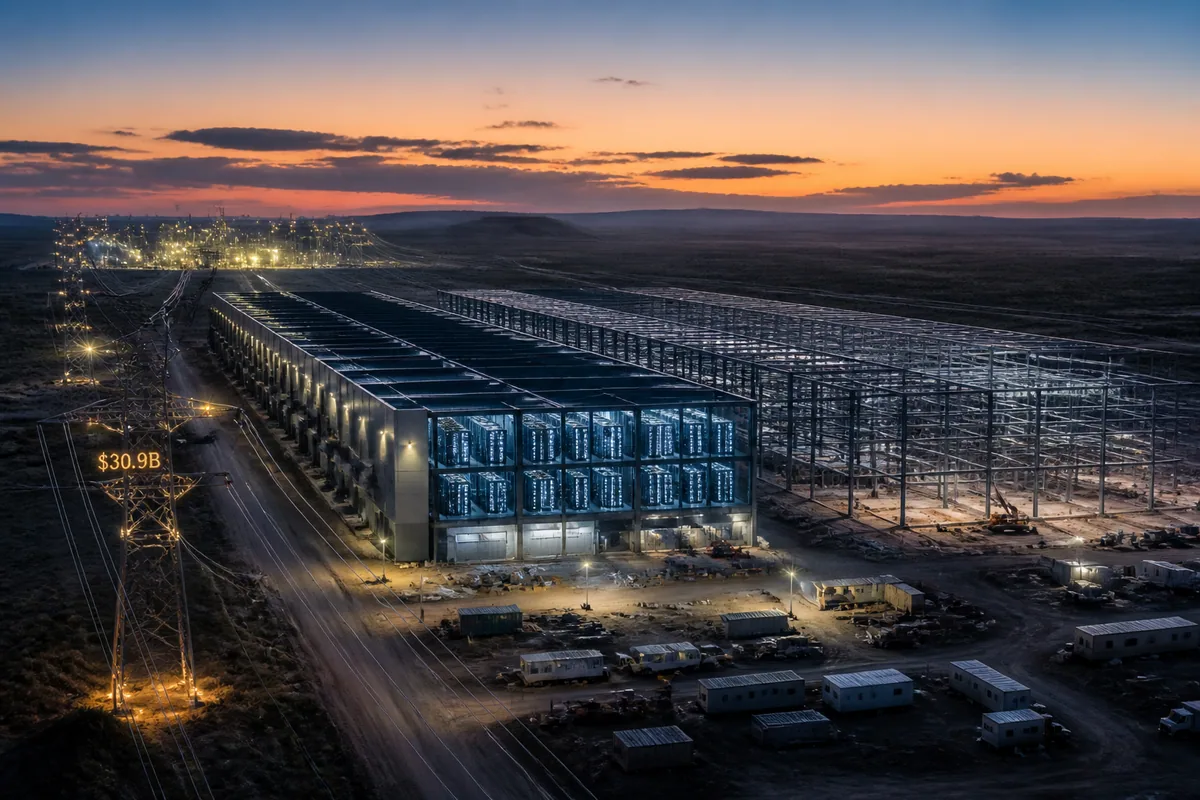
Crusoe just closed a $3.9 billion Series F led by Atreides, Mubadala Capital, and Valor Equity, with NVIDIA, Founders Fund, GIC, QIA, TPG, and Radical Ventures riding along, putting the company at a $30.9 billion post-money valuation. The headline number sounds like a data center raise. The one buried in the release is more interesting: Crusoe says it's sitting on $140 billion-plus in contracted value against more than 6 GW of gross capacity, but only about 1 GW of that is actually energized and running today. CEO Chase Lochmiller frames the pitch as controlling everything "from electrons to tokens," which is the right ambition for a market where power, not chips, is the bottleneck, and also the risk: investors just priced in five more gigawatts that exist mostly as signed contracts and construction schedules. That gap between contracted and operational is where AI infrastructure bets tend to go sideways.
🧠 MODELS & RELEASES
- 🤖 AWS rebuilt the AgentCore runtime so idle sessions give memory back instead of sitting on it, and cold starts stay flat no matter how big your image gets or how many agents you're running. Builder read: that's the provisioning tax on production agents going away. [https://aws.amazon.com/blogs/machine-learning/the-new-agentcore-runtime-elastic-optimized-and-consistently-fast-starts/]
- 📊 Google added academic advisors and fellows to its AI & Economy research team. Thin on specifics, but it signals the labs now think labor-market impact is worth a standing bench, not a one-off study. [https://blog.google/innovation-and-ai/technology/ai/expanding-ai-economy-research-bench/]
🔬 RESEARCH HIGHLIGHTS
- Score centering tackles the quiet gremlin in LLM RL training: your training engine and inference engine never compute logits identically, and that mismatch drifts and compounds as training runs on, eventually blowing up runs that were stable for hours. Instead of eliminating the mismatch (expensive, kills rollout efficiency), the authors add a correction term that just counteracts the drift. Tested from 0.6B to 30B params, it matches or beats importance-sampling fixes under quantization, and the gap widens the worse the mismatch gets. If you're running RLHF-style post-training with vLLM serving rollouts, this is the failure mode you've probably already hit without a name for it. arxiv.org/abs/2609.20807v1
- SafeHarness asked a question nobody had: coding agents now write robot controllers as code and run real hardware without robot-specific training, but are they safe? Baseline answer is no. Without guardrails, agents collide with obstacles in most trials because they optimize for "task done," full stop, safety not included. Adding obstacle-aware route planning and contact execution pushed task success to 71.9% (up 6.5 points) and collision avoidance to 87.5% (up 27 points) over prior SOTA. Worth remembering next time someone pitches "just let the coding agent drive the robot arm." arxiv.org/abs/2609.20822v1
- RAFT points at something obvious in hindsight: enterprise support RAG treats a troubleshooting case as one static document, when it's really a sequence of stages, each with its own state. RAFT retrieves at the timeline-entry level instead of the case level and beats vanilla RAG and GraphRAG baselines at every stage, with significant gains over the strongest baseline. The synthetic benchmark (Windows Server docs) is clean; the real-world check against Apache Jira duplicates is only directional, not conclusive. Still, if your support agent keeps citing resolved-but-irrelevant tickets, this is the shape of the fix. arxiv.org/abs/2609.20754v1
🚀 AI STARTUPS
- Raindrop closed a $35M Series A led by CRV, bringing total funding to $50M. Lightspeed and Y Combinator followed on, plus a roster of individual researchers from OpenAI, Anthropic, and Thinking Machines. The pitch: catch agent failures in production, silent hallucinations, tool misuse, behavior drift after a model swap, before they hit users. Customers include Vercel, Framer, Clay, and a few Fortune 100s. Alongside the round, Raindrop launched Simulations, which replays real production traffic against a proposed agent change before you ship it. That's the actual product news here; the round is just what paid for it. Axios
🛠️ TRY THIS
Stand up a Hugging Face model on a real SageMaker endpoint, no infra ticket required
Crusoe just proved compute capital is chasing real deployment, not just training runs. The gap between "picked a model on the Hub" and "have a production endpoint" is where most teams stall. AWS shipped six open-source agent skills that close it.
1. Point a coding agent (Claude Code, Cursor, whatever you run) at the Hugging Face model you want and the new skill set.
2. Let the agent pick the serving container and instance type, it knows the tradeoffs so you don't have to look them up.
3. Have it wire autoscaling and CloudWatch alarms before the endpoint goes live, not after a 3am page.
4. Confirm the teardown path works before you walk away. An endpoint nobody remembers is a line item nobody explains.
Prompt: Using the SageMaker deployment skills, deploy <hf-model-id> as a real-time SageMaker endpoint. Choose an appropriate serving container and instance type, enable autoscaling and CloudWatch alarms, and verify a clean teardown path before you finish.Worth a look
- AWS's MCP authorization pattern: if that endpoint is getting called by agent tools, not just apps, check this one. It wires Microsoft Entra ID JWTs through a Bedrock AgentCore Gateway interceptor for per-user, per-tool RBAC/ABAC on MCP tools. Amazon Bedrock AgentCore Gateway is the piece most teams skip until a security review forces it.
🔗 QUICK LINKS
- AWS SageMaker Inference shipped 13 launches this year, tiered KV caching and disaggregated prefill included. Mostly plumbing, but it's the plumbing that decides your inference bill. SageMaker Inference: 2026 YTD review
The megawatts are the story to watch here, not the valuation.
Pradeep Perugu