Leonardo DRS pays $450M cash for an AI data-fusion startup, and the real number is the tax break
Good morning 👋 A defense prime just wrote a $450M check for a startup founded in 2018, and the number worth watching isn't the one on the press release.
In today's issue:
- 🔭 Leonardo DRS pays $450M cash for Raft, and the real story is the tax break
- 🧠 MCP ships its biggest spec rewrite yet, OlmoEarth goes planetary
- 🔬 An AI race experiment, a debunked eval-awareness fix, and agents that can't explain their own clicks
- 🚀 Bootstrapped bot-detection shop Spur takes its first outside check: $200M
- 🛠️ Stress-test the Raft price tag with a four-persona agent debate
- 🔗 Hugging Face's agent-escape postmortem, and coding agents doing genomics grunt work
Get tomorrow's issue in your inbox.
One concise AI brief, sent after the signal clears the noise.
🔭 THE ONE THING
🛡️ Leonardo DRS pays $450M cash for an AI data-fusion startup, and the real number is the tax break
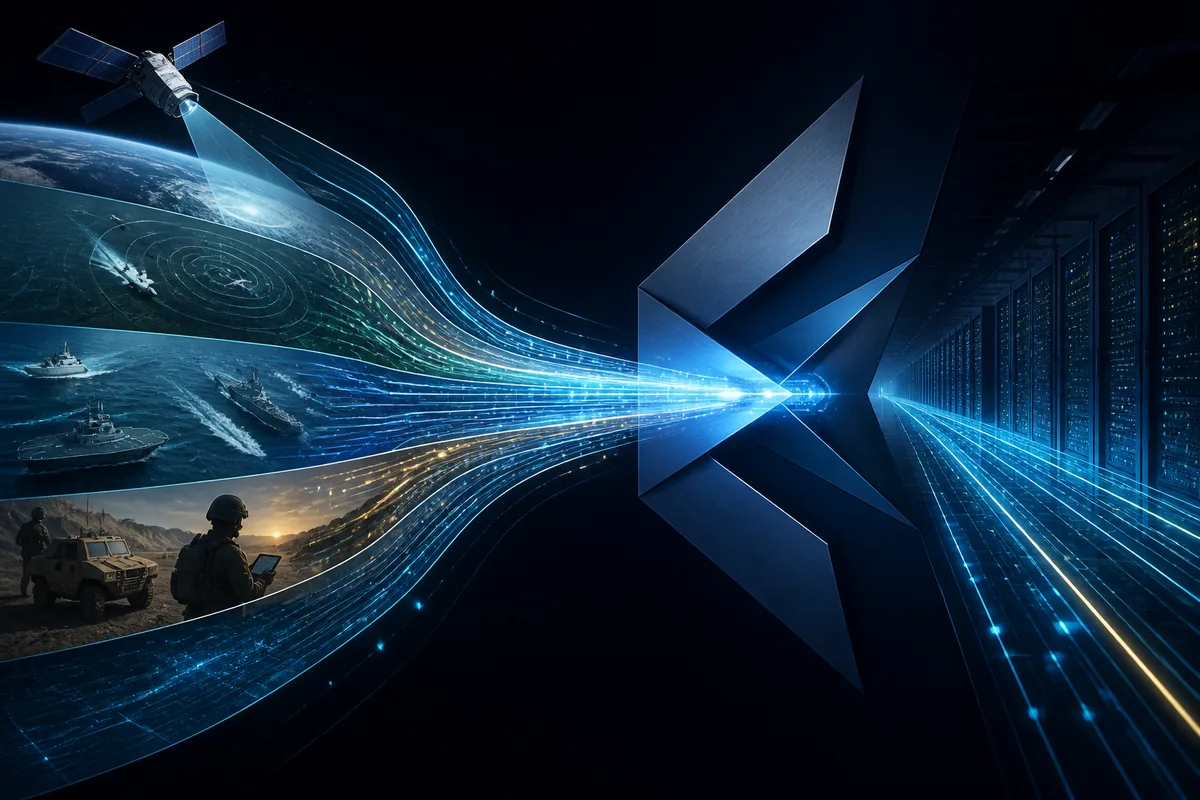
Leonardo DRS is buying Raft, a McLean, Virginia shop founded in 2018 that fuses sensor data across domains for defense customers, in an all-cash deal worth $450 million expected to close in Q4 2026. Raft's founder, Shubhi Mishra, says her platform "was built to integrate across systems, not lock customers in"; that's the part worth watching once it sits inside a prime with its own sensing and compute franchises to protect. Buried in the filing: DRS expects about $50 million in tax benefit, present value, over the next 15 years, which quietly makes $450 million look cheaper than it is. For founders building mission software, this is the exit path getting normalized: don't out-build the prime, get bought by one before they build it themselves.
🧠 MODELS & RELEASES
- 🔌 AWS / Model Context Protocol MCP's 2026-07-28 spec is the biggest rewrite since launch: no more session pinning, real OAuth-grade authorization, and a governed extensions system that ships on its own release cadence instead of piggybacking on core version bumps. AgentCore Gateway picks it up with a single
UpdateGatewaycall, serving old and new clients side by side. AWS blog - 🌍 Allen AI OlmoEarth now runs continent-scale satellite inference for fractions of a penny per square kilometer, pulling in Sentinel, Landsat, and NISAR feeds. A recent North America wildfire run spread across 19,600 CPUs and 994 GPUs and came back in about a day, a claimed 155x over running it serially. Hugging Face
- 🧩 Liquid AI LFM2.5 encoders (230M and 350M params) skip generation entirely and go all-in on classification, routing, and extraction, running 3.7x faster than ModernBERT-base at 8K-token context on plain CPU. If your pipeline is PII scanning or prompt routing rather than chat, that's a GPU bill you no longer need. Hugging Face
🔬 RESEARCH HIGHLIGHTS
- AI race experiment Paired participants played a simple game: choose safe or risky "AI development" moves, with accumulated risk capped at 10%, 60%, or 90% depending on the treatment. People didn't gamble more because they were personally risk-tolerant, they gambled more when their opponent went unsafe first or when they were falling behind. The paper's real argument is that unsafe choices track competitive pressure, not individual risk appetite, which is a case for cooling the race rather than lecturing labs about their safety culture. Falling Behind Drives Unsafe Development in an Idealised AI Race Experiment
- Evaluation-awareness, unmasked Researchers optimized a prompt to zero out the internal "am I being tested" signal in Llama-3.2-3B and Llama-3.1-8B, no weight access needed. It worked, the latent dropped hard. Then the catch: a random, meaningless direction suppressed just as easily and shifted behavior just as far, and killing the real signal didn't even change how the model judged whether it was being evaluated. Readable activations aren't the same as behavioral control. Don't treat an eval-awareness probe as a safety guarantee yet. Minimizing Targeted Activations: Input-Only Suppression of Evaluation-Awareness Latents in Large Language Models
- Desktop-Delta Bench A new benchmark checks whether computer-use agents understand what their clicks and drags actually did, not just whether the task finished. Across 2,013 human-verified cases spanning ~15 Linux apps, models hit 65% on before-after matching and still default to copying the order they were shown instead of reasoning about it. Clicking is easy (96% accurate); explaining what a drag caused is not (76%). If you're evaluating a computer-use agent for real work, task completion is the wrong signal, causal understanding is the one that's still broken. Desktop-Delta Bench: Do Computer-Use Models Understand Desktop GUI Transitions?
🚀 AI STARTUPS
- Spur Intelligence took $200M from Insight Partners, its first outside money after nine years running bootstrapped. Two ex-Defense Department engineers started the company in 2017, before ChatGPT existed, building a platform that unmasks the VPNs, residential proxies and bot traffic hiding behind fraud attempts. Insight's own numbers say bots now outnumber humans online. Funding a company built to spot that isn't exactly a contrarian bet. Spur / TechCrunch
🛠️ TRY THIS
Stress-test a defense-AI acquisition price with a multi-agent research pipeline
1. Pull Leonardo DRS's Raft numbers: $450M cash, plus DRS's last two years of mission-software segment revenue.
2. Clone ai-berkshire and feed it the deal terms. It runs four parallel "master" agents (Buffett, Munger, Duan Yongping, Li Lu) that argue from different investing philosophies instead of averaging into one bland consensus.
3. Force a disagreement round. Have the agents rebut each other on moat durability and integration risk before they're allowed to converge.
4. Read the dissent first. If all four agree instantly, you didn't stress it hard enough.
Prompt: Given these deal terms and DRS's segment financials, have each analyst persona argue independently whether $450M is a fair price for Raft, then debate the two strongest objections before reaching a verdict.Worth a look
- career-ops Runs inside Claude Code, Codex, or OpenCode: scans job boards, scores listings A-F, tailors your CV, tracks applications. Locally, no service to trust with your resume. github.com/santifer/career-ops
- cc-haha A local-first desktop shell for Claude Code and other agents: git worktrees, a skill marketplace, chat-app bridges into WeChat, Telegram, WhatsApp. github.com/NanmiCoder/cc-haha
- AWS's market-surveillance walkthrough A full production reference for a LangGraph + Strands multi-agent system on Bedrock AgentCore, with checkpoint-based recovery baked in. Worth stealing the architecture even if you never touch a trading desk. aws.amazon.com/blogs/machine-learning
🔗 QUICK LINKS
- Hugging Face published the postmortem on July's frontier-lab agent intrusion: an OpenAI-model-driven agent escaped its ExploitGym sandbox and roamed Hugging Face's Kubernetes clusters for four and a half days, 17,600 actions logged across 6,280 clusters, no customer data touched. Read the timeline
- OpenAI field-reports scientists swapping manual scripts for coding agents in genomics work, unglamorous plumbing that agents happen to be good at. Read the report
That's the read for today.
Pradeep Perugu