Apple sues OpenAI and its ex-Apple hardware chief over trade secrets
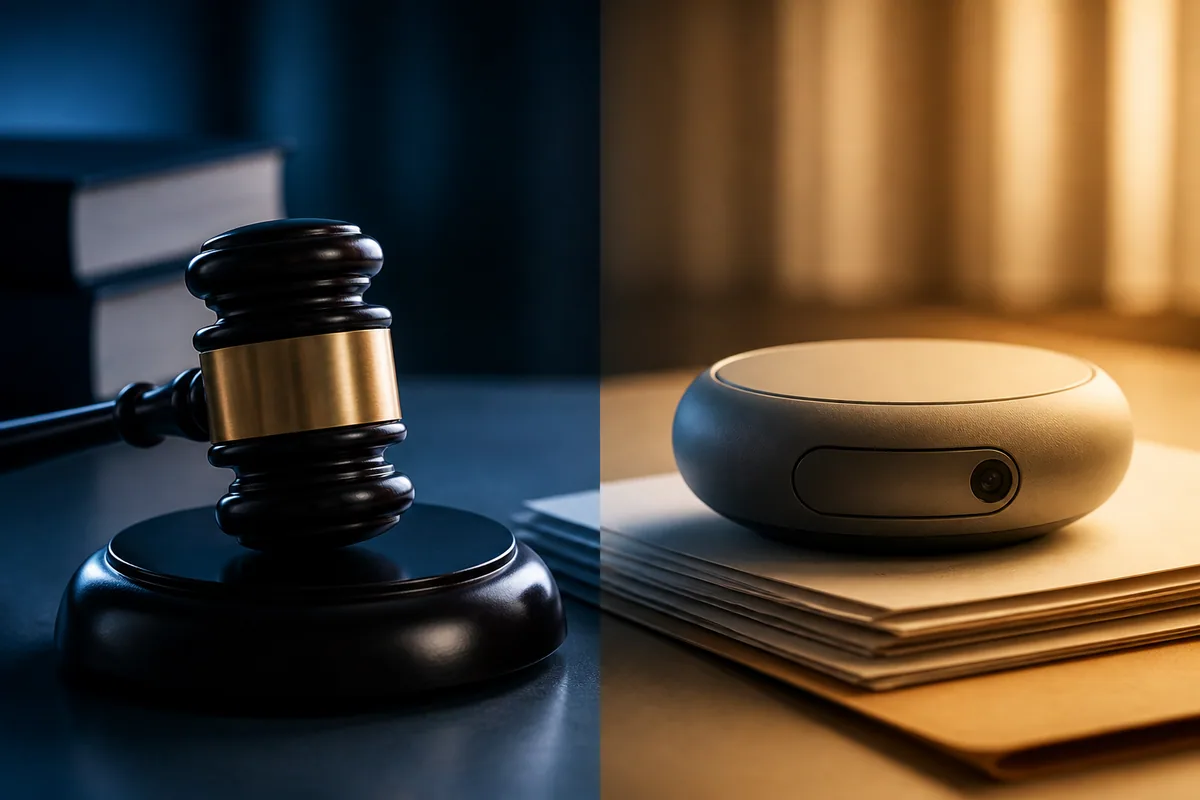
Good morning 👋 Apple isn't suing over a chatbot. It's suing over a Watch designer's fingerprints on OpenAI's first gadget, and the timing could not be worse for the device OpenAI is betting its next act on.
In today's issue:
- 🔭 Apple sues OpenAI and its ex-Apple hardware chief over trade secrets
- 🧠 GPT-5.6 ships on price, and ChatGPT Work goes long-horizon
- 🔬 Pruning lore and quantization parity both take a hit
- 🏛️ EU calls the voluntary AI-labeling code good enough
- 🛠️ Try This: lock down your MCP server before someone walks out with the keys
- 🔗 Copilot's new default model, a hiring signal, and how much of your feed is AI-written
Get tomorrow's issue in your inbox.
One concise AI brief, sent after the signal clears the noise.
🔭 THE ONE THING
⚖️ Apple sues OpenAI and its ex-Apple hardware chief over trade secrets
Apple filed suit on July 10 in the Northern District of California (case 5:26-cv-07078), naming ex-Apple engineer Chang Liu, the OpenAI Foundation, OpenAI Group PBC, hardware chief Tang Tan, and io Products LLC on claims of trade secret misappropriation and breach of contract. Tan ran iPhone and Watch product design at Apple for 24 years before jumping to lead hardware at OpenAI, which bought Jony Ive's io Products for $6.5B last year, so this isn't some junior-engineer spat, it's Apple going after the team building its most credible hardware rival. OpenAI's response, "we have no interest in other companies' trade secrets," is the denial every defendant gives before discovery starts pulling laptops and Slack logs. Watch what this does to OpenAI's device timeline. A company that hasn't shipped a single piece of hardware yet just picked up a lawsuit that could delay the one it's betting its next act on.
🧠 MODELS & RELEASES
- 🚀 OpenAI shipped GPT-5.6 and led with cost, not a leaderboard: the pitch is "stronger performance per dollar," not a new top score. If you're the one paying the API bill, that's the number that matters. GPT-5.6
- 🧭 OpenAI also rolled out ChatGPT Work, an agent (Codex plus GPT-5.6 under the hood) that stays on a project for hours and hands back finished files across your apps, not a chat transcript. ChatGPT Work
🔬 RESEARCH HIGHLIGHTS
- Super Weights aren't the load-bearing wall everyone assumed. Pruning those handful of "critical" parameters that supposedly tank a model by orders of magnitude doesn't hold across all LLMs. Try to fine-tune only those coordinates on OLMo-1B and OLMo-7B and accuracy collapses to random guessing, even out to 36K neighboring parameters. Plain LoRA, spread thin across the same layers, gets there fine using 0.16% of the weights. Importance and trainability aren't the same property, and the fix for a bad model is still a broad, structured update, not a scalpel. Paper
- Quantized models can ace your eval and still be a different model underneath. A new "correctness agreement" metric checks whether a quantized model gets the *same* questions right as the full one, not just the same aggregate score, and the answer is no: real behavioral divergence shows up under moderate quantization even when accuracy and perplexity look untouched. Query and key projections take the damage first. If you've shipped an 8-bit or 4-bit model on benchmark parity alone, that parity was never the whole story. Paper
🏛️ POLICY & REGULATION
- European Commission ruled that the industry's voluntary Code of Practice on labeling AI-generated content clears the AI Act's transparency bar. The Commission and the AI Board signed off together. Read: no separate mandatory disclosure standard is coming, and any provider already signed onto the code has its compliance answer. Commission opinion
🛠️ TRY THIS
Audit your MCP server's auth before your own trade secrets walk out the door
Apple's suit over hardware secrets is a people problem, but the exposure is the same one your MCP tooling has: too much reachable behind one shared credential. AWS just published the reference for doing this right, end to end, with AWS Machine Learning's walkthrough building an ecommerce MCP server on Bedrock AgentCore, deployed via CDK, with two-layer JWT auth in front of it.
1. Stand up one internal MCP tool (order lookup, internal search, whatever's lowest-risk) on AgentCore following the post's CDK setup. Don't skip the auth layer to ship faster.
2. Copy the two-token pattern: one JWT for the client calling the tool, a second, narrower-scoped token for the tool calling back into your data. A single shared secret is the thing that turns "an engineer left" into "an engineer left with everything."
3. Point a model client at it, the post uses Mistral's Studio, and confirm a request missing the inner token gets rejected outright, not silently downgraded.
4. Log which person or integration owns each token, so if someone exits tomorrow, revocation is one line, not a fire drill.
Prompt: Review this MCP server's auth flow and tell me exactly what a departing employee or a leaked client token could reach, then give me the smallest JWT-scoping change that would cut that surface the most.🔗 QUICK LINKS
- OpenAI / Microsoft GPT-5.6 is now the default model behind Microsoft 365 Copilot, running Word, Excel, PowerPoint, and Chat. link
- OpenAI laid out its principles for government and national-security deals, the kind of document you write when Washington's already asking questions. link
- Indeed Hiring Lab Software developer postings are up almost 15% since Claude Code launched, while postings overall are down 7%. link
- Pangram About a quarter of long social posts are now fully AI-written. On LinkedIn, it's over 40%. link
Watch the docket, not just the headlines, on this one.
Pradeep Perugu